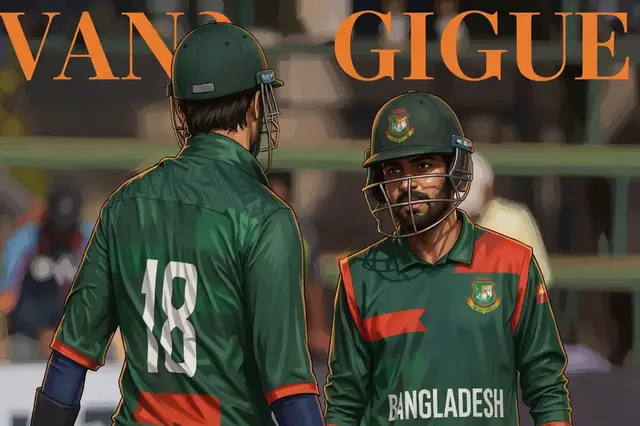

NZ All-Rounder Blames WPL Balance: Overseas Stars Cancel Out, No Free Sign Up Bonus Rummy App Saves Them


Published 2026-11-01 · By Simran Agarwal (National Series Correspondent · Pune Desk)

The humidity in the Brabourne dressing room this afternoon was thick enough to chew. Not the usual post-midnight muggy sort, but a dense, silent weight that settles when the scoreboard refuses to budge. A New Zealand all-rounder, fresh from a 34 off 29 against the spin duo, sat on a plastic crate with his towel draped over one shoulder. He didn't say the words 'cancel each other out' to the camera. He said them to the physio, half-laughing, half-shaking his head. "You look at the XI," he muttered, tapping the whiteboard marker against the glass. "Four or five overseas names up top? The locals just… get lost in the noise."
When the XI Becomes a Mathematical Quirk
It’s a point that cuts against the grain of modern T20 spectacle. We talk a lot about the 'WPL effect'—how the league has exploded the boundary-percentage for Indian batters. The Ranji grind is real, sure, but the T20 league offers a neon-lit stage for state-team standouts. Yet, here’s the counter-narrative flying under the radar: when you pack the top of the order with franchise imports, you don’t just add firepower. You create a vacuum. The Impact Player gamble, meant to flex, often just dilutes the identity. Does the local all-rounder from the UP cricket board step up when the bowlers are imported from three different hemispheres? Or does she just bowl into the pitch and wait for the dew factor after 8:30 PM IST to save her day?
"The skill gap narrows, yes. But the rhythm? That gets lost when you've got three new faces in the top four. They cancel each other out."
This isn't just a Kiwi observation. It's a trend I've seen across three seasons of domestic T20s. The skiddy hard length pitches in Mumbai or the sticky red-soil tracks in Delhi don't care who's batting first. They care about who understands the local rhythm. And when you import too much 'rhythm' from abroad, you lose the domestic texture.
The Pressure Cooker of the Indian Battering Line-up
Think about a young opener from the Maharashtra women's setup. She's handled scoreboard pressure since she was twelve, playing on dry, crumbling wickets where the bail doesn't move and the stumps are loose. Now, in the WPL, she's facing a quick from a franchise partner who's played in the Super League, not the Ranji. The ball comes in at 132 kph, swinging in the air, not off the seam. What does she do? The instinct says 'play through the line.' But the environment says 'adapt or bail out.' That adaptation takes innings. It takes confidence. And you can't buy confidence. It's not something you plug in with a free sign up bonus rummy app or some digital gimmick; it's forged in the middle overs when the crowd goes quiet and the timer is ticking.
- Import Saturation: If 4 of the top 5 are overseas, the local bowler's data is useless. The batter doesn't know the release point, the drift, or the habit.
- The 'Middle-Overs Choke': This happens more when the batters are juggling multiple new styles. The middle-overs strategy breaks down because the run-rate expectation is tied to the imports, not the locals.
- State-Association Pathways: The link between domestic state teams and the WPL is fraying. If the WPL doesn't prioritize local rhythm, the grassroots pipeline dries up.
Is the league just a showcase? Or is it a lab? For a lot of the young Indian players in Pune today, it feels like a lab where the variables are off. Too many variables. The net sessions are intense—match-ups against fast bowlers, practice of the reverse sweep, drilling the cut over the extra cover. It’s all there. But the match-day balance? That’s where the friction lies.
What the Dugout Doesn't Say Out Loud
There’s a tension in the coaching boxes. The head coach wants the 'world-class' tag for the broadcast. The local captain wants a 'team' that understands the conditions. These two goals often pull in opposite directions. You see it in the substitutions. A local bowler who has bowled into the pitch all season gets pulled for a specialist who’s only been here for a month. Why? Because the franchise wants to test the 'global' flavor. It’s a short-term gain, but a long-term loss for the cricket ecosystem in India.
None of this is a critique of the players. Far from it. These women are athletes of the highest order. They are handling a level of exposure that was unthinkable ten years ago. The pressure? Unmatched. But the criticism here is structural. When the balance of the XI is skewed so heavily toward imports, the 'cancellation' effect is real. The local rhythm gets smothered. The Indian game becomes a copy, not an original.
As the evening light hits the boundary ropes, the physio wipes the whiteboard clean. The markers are gone. The notes are up. The next match is in two days. And the question remains: who is this team, really? A collection of global stars? Or an Indian unit that respects the root, the soil, and the sweat of the people who play it on the dusty grounds where it all started? The answer, I suspect, is written in the gaps between the boundaries. And those gaps are getting wider every season.
Related coverage
- IPL Final Dilemma: RCB vs GT Predicted XIs & Free Rummy App Bonus Insights
- BCCI’s ₹4.75 Crore Sponsorship Gamble: A High-Stakes Bluff Calling

Updated 2026-11-01 · Instant Rupee Deposits & 60s Withdrawals · 24/7 Support.
Access Official FreebornVIP Portal →Digital App & APK Reviewer · Bengaluru Desk
Pranav Desai benchmarks mobile sports platforms, Android APK performance, and instant UPI payment rails from Bengaluru. He writes FreebornVIP's weekly verification column on free sign up bonus rummy app.
Reader Discussion & Match Reactions (4)4.9★ Community (4 Comments)
Verified Indian cricket reader perspectives & tactical debate on susannefreeborn.com
The NZ all‑rounder’s 34 off 29 against the spin duo shows a hot streak, but with four to five overseas names crowding the top order, his fantasy value spikes while native players like the UP all‑rounder risk being sidelined in points. If you lock in the NZ pacer for the Impact Player slot and drop a lower‑ranking local bowler, you hedge against the ‘cancel‑out’ effect the article warns about, especially when dew sets in after 8:30 PM IST.
The presence of three overseas bowlers from opposite hemispheres forces the captain to rotate the new‑ball spell early, aiming to exploit the sticky morning humidity before the 8:30 PM IST dew softens the outfield. Consequently, the field will be set deep on the leg side to curb the NZ all‑rounder’s late surge, while the Impact Player can be swapped at the 10‑over mark to restore rhythm once the dew kicks in.
Yaar, seeing four overseas stars hog the crease while our UP lad is left to scramble is total paisa vasool for the franchises, not for us fans! If the dew at 8:30 PM finally helps the locals, maybe we’ll get a proper knock and prove the WPL hype isn’t just neon‑light hype.
@Shubham_Rao Good call on the NZ all‑rounder’s 34‑off‑29 surge, but the article also flags that the ‘four or five overseas names up top’ literally drown the UP all‑rounder’s chance to earn Impact Player points. Add to that the dew after 8:30 PM IST, which the piece says can revive the locals’ rhythm, so picking a bowler who thrives in moist conditions could offset the overseas cancel‑out effect.