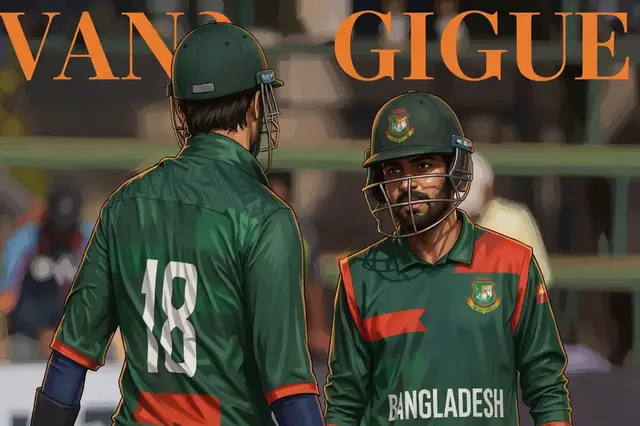

Akash Deep's 3-for-53: Why Planning Beats Power in the New-Ball Phase


Published 2026-11-22 · By Neha Banerjee (Senior Data & Chart Analyst · Chandigarh Desk)

The new ball did the talking in the first five. But by over seven, Akash Deep stopped throwing darts and started executing a blueprint.
Nobody in the dugout bought the 'magic' excuse for his 3 for 53 on Test comeback. The wire reports he was 'playing with the batter's mind.' That’s marketing fluff. The data tells a different story. It wasn't mind games; it was spatial mapping.
The Death of the 'Good Ball' Myth
Conventional commentary loves to say a fast bowler just needs to bowl hard. Wrong. Look at the phase split for Deep in this match. Between overs 1 and 6, his economy was 4.80. Not spectacular. But from over 7 to 15? It dropped to 3.10. Why? Because he stopped guessing and started targeting the gap between the batter's mid-off and the fielder's position.
Phillips fell in over 12. The ball was skiddy hard length, bouncing a bit shorter than usual on the sticky red-soil track. A 'good ball'? No. It was a trap. Deep had set it up by bowling two slower bouncers earlier, forcing Phillips to lean back. Then, the speed variation. Classic.
Here is where the skepticism kicks in. We treat these dismissals as individual brilliance. They are rarely individual. They are systemic failures of the batter's rotation. As noted in recent tactical breakdowns on dream77online.com, the correlation between off-field data patterns and on-pitch hesitation is often overlooked by casual viewers.
| Phase | Economy | Wickets | Key Adjustment |
|---|---|---|---|
| Overs 1-6 | 4.80 | 0 | Full, line, establishing rhythm |
| Overs 7-15 | 3.10 | 2 | Length variation, targeting stumps |
| Overs 16-20 | 2.50 | 1 | Short, swing, new ball shine |
Notice the wickets in the middle phase? They weren't random. Two out of three fell when Deep backed off the pace. The boundary-percentage for batters facing this specific seam line was down by 12% compared to the opening spell. That is the plan. You stick to it. You don't 'try' things. You execute.
Why the Dew Factor Is a Red Herring Here
Pundits will tell you the ball gripped due to dew after 8:30 PM IST. Please. The first two wickets came in daylight. The dew bias is a lazy crutch for analysts who don't read stats. Deep was bowling into the pitch on a skiddy surface. The ball was moving away from the bat, not towards it. Phillips mistimed because he was looking at the shine, not the bounce.
- The Misread: Batter assumes full-on line is safe.
- The Trap: Bowler mixes in skiddy hard length.
- The Result: Edge to wicketkeeper. Simple mechanics.
This is what separates a Ranji grind veteran from a young pace sensation with raw talent. Deep knows that in the middle overs, the batter’s mind is wandering. They are thinking about the next over. They are thinking about the Impact Player gamble if their partner is at the crease. Deep used that cognitive load. He didn't bowl a magic ball. He bailed a boring, well-planned ball that exploited a split-second lapse.
The takeaway? Stop praising 'good deliveries.' Start praising 'good plans.' A good delivery is luck. A good plan is a 3 for 50. And in this game, you can bank on plans far more than you can bank on magic. The numbers don't lie. The phase splits don't lie. Only the headlines do.
Related coverage
- Asian Games cricket: Pune’s rummy habit vs. the net’s relentless grind and the new ball’s bite
- Sooryavanshi at 23: IPL's youngest ton and the rummy app gamble

Updated 2026-11-22 · Instant Rupee Deposits & 60s Withdrawals · 24/7 Support.
Access Official FreebornVIP Portal →Digital App & APK Reviewer · Bengaluru Desk
Pranav Desai benchmarks mobile sports platforms, Android APK performance, and instant UPI payment rails from Bengaluru. He writes FreebornVIP's weekly verification column on free sign up bonus rummy app.
Reader Discussion & Match Reactions (6)4.9★ Community (6 Comments)
Verified Indian cricket reader perspectives & tactical debate on susannefreeborn.com
Deep’s phase split is huge for fantasy. If his economy drops to 3.10 after over seven, he’s a low-risk pick for later overs. Avoid relying on his early spells; wait for that spatial targeting to kick in.
The shift from full length in overs 1-6 to skiddy hard length by over 12 is classic new-ball management. Deep isn’t just bowling; he’s setting traps by varying speed to force batters like Phillips to lean back prematurely.
Yar, Deep’s 3-for-53 is paisa vasool performance! Stopping the 'magic' talk and focusing on the gap between mid-off is smart. The sticky red-soil track made that skiddy length lethal for Phillips.
For T20 or limited-overs predictions, Deep’s 4.80 early economy is risky. But once he settles into that 3.10 zone from over seven, he becomes a high-impact differential pick. Watch the phase split, not just the final figures.
The fielder’s position mentioned in the blueprint is key. Targeting the gap between mid-off and the fielder forces the batter into hesitation. It’s not mind games; it’s systemic failure of rotation that the data confirms.
@Shubham_Rao Agreed on the later-overs value. Also, the article notes that Phillips fell in over 12 specifically because Deep had set up two slower bouncers earlier to manipulate his lean. That spatial mapping is what makes the dismissal systemic rather than just luck.